|
Wave 100i 101 cont'd
The first lovely, clear, cool skies of autumn arrived with the full Moon, but that matters little enough while knocking the bugs out of how to use the 100i strainwave mount casually with a long lens and the R6. Under clear skies, short, 15-20 second exposures at ISO 800-1600 are ueful despite the Moonlight. Take from a few to a hundred subs, manufacture a flat, and go for it. Recent successes with M57 and M13 are encouraging. I'm practicing tonight on M56 and M27 (weather willing). Guided, narrow-band imaging can wait a little while as I get back to speed with this newer, lighter, kit. But! Then I was bitten by a known firmware bug. After lining up on M27, the mount simply did not track. Per Google: "The issue you are experiencing with the Sky-Watcher Wave 100i -- dropping out of Right Ascension (RA) tracking immediately after a GoTo slew when using only the SynScan V5 Hand Controller -- is a known firmware bug. When the Wave 100i first launched, many of the SynScan V5 handsets shipped with older factory firmware (typically v06.00.07 [mine!]). That version is incompatible with Sky-Watcher’s new strain-wave mounts and forces the mount to disable tracking the moment a GoTo command finishes." Why did it work so well until right now? Anyway, until I can pull the kit together to flash the firmware, there's a workaround to try: after a goto, restart sidereal tracking manually (Menu / tracking / sidereal / enter). First, I'll clean the contacts under the buttons and the cable connections. Then try it again. Then flash the firmware. Then find or make a softcase to keep dust, pollen, and dew away. As for post, the workflow for OSC images in PixInsight is: Calibrate ➔ Debayer ➔ Align ➔ Stack. You can manufacture a pretty good flat from any single light provided there are no overwhelming luminaries in the frame. Use StarXterminator, then Multiscale Median Transform with only a high-order, 6th or 7th layer, enabled to produce a large-scale mean. Save the implicit flat it in the same format -- 32 bit floating point -- as the lights. If, after applying the flat, a color gradient remains (center to edge), be aggressive with background extraction (divide) to minimize it. M13, M57, M56 efforts have all been quite successful despite a full Moon (which likely contributed spurious "star clouds" around M56 -- worth another look without excess light). I nailed polar alignment and focus; used 20s exposures at ISO 1600 and got good results with anywhere from 40 to 116 subs, unguided.
9/29/2026. Cleaning completed. Not quite as thorough as shown in this video, but a good cut at what I think is not the problem. This link skips ahead to a very patient man doing the job on a handset identical to mine in near real-time: https://youtu.be/KvINTfvS8TM?si=6nOWWMVpWTJapDaU&t=818 Hanging and reluctant slews are fixed, and the workaround described above for the "freeze after goto" firmware bug works. As long as I remember to restart tracking, all is well. I'm enjoying near-perfect gotos on both sides of the meridian (which I think is down to good polar alignment w/o magnetic compass complications more than to the cleaning). Last night, the ESC key was sticking slightly. So today I did it again, getting into more of the nooks and crannies around the key holes and sleeves.
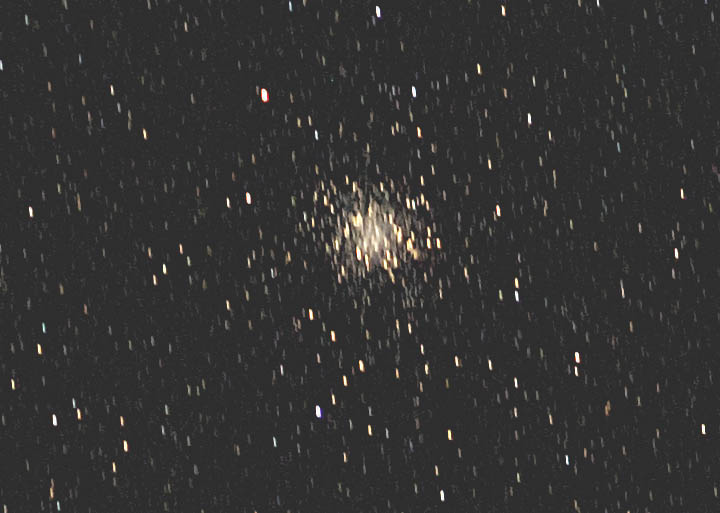
9/30/2026. Another clear night. I started with M22, and suffered bad drifting. Look at this mess, and try not to compare it to the shot above:
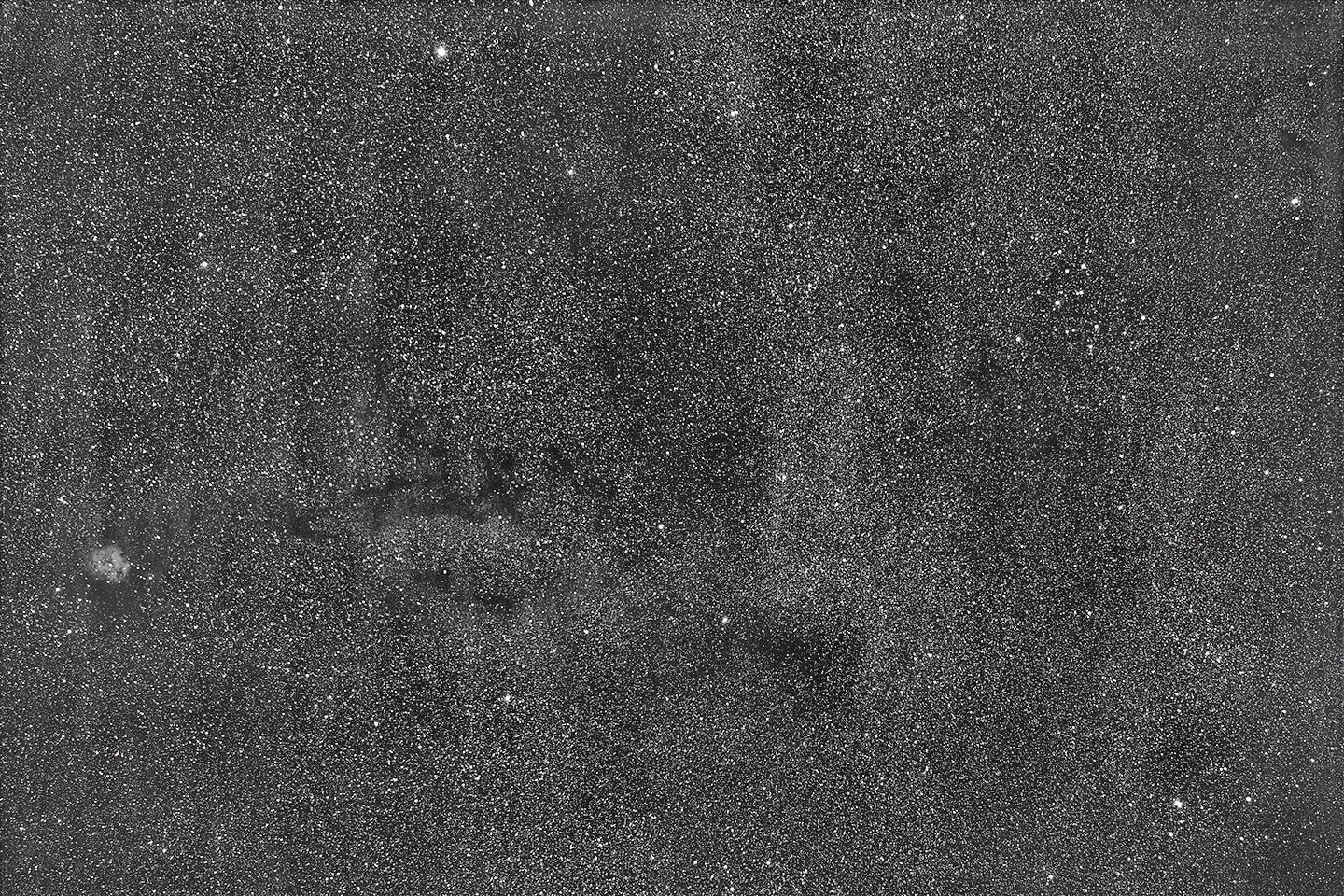
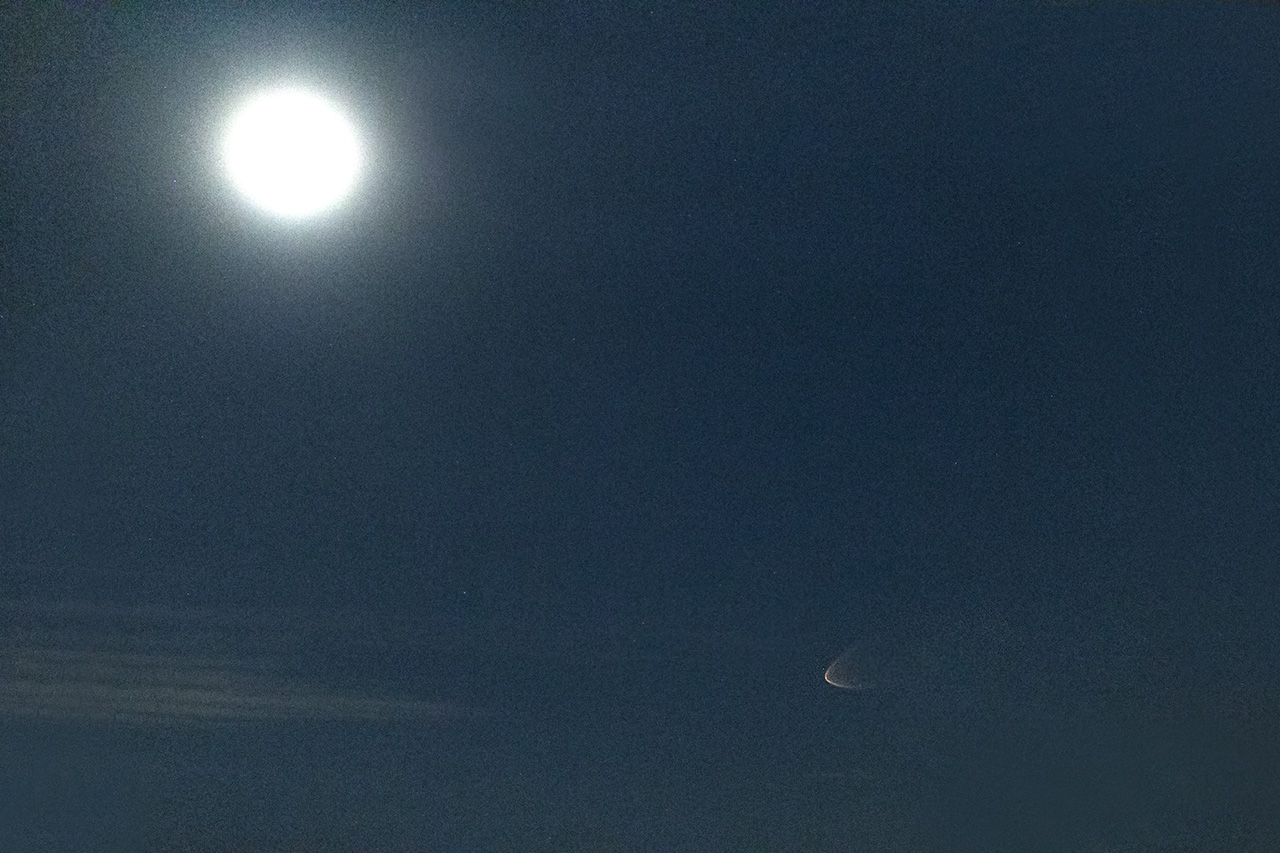
Here's a calculator to estimate polar alignment error from drift: After a few additional frames (NGC 7023, NGC 7000) with at best indistinguished results (and at worst failure to find the target), I enjoyed a Falcon Heavy launch for a consolation prize. SpaceX lofted NROL-97 to orbit shortly after Moonrise. Make it big:
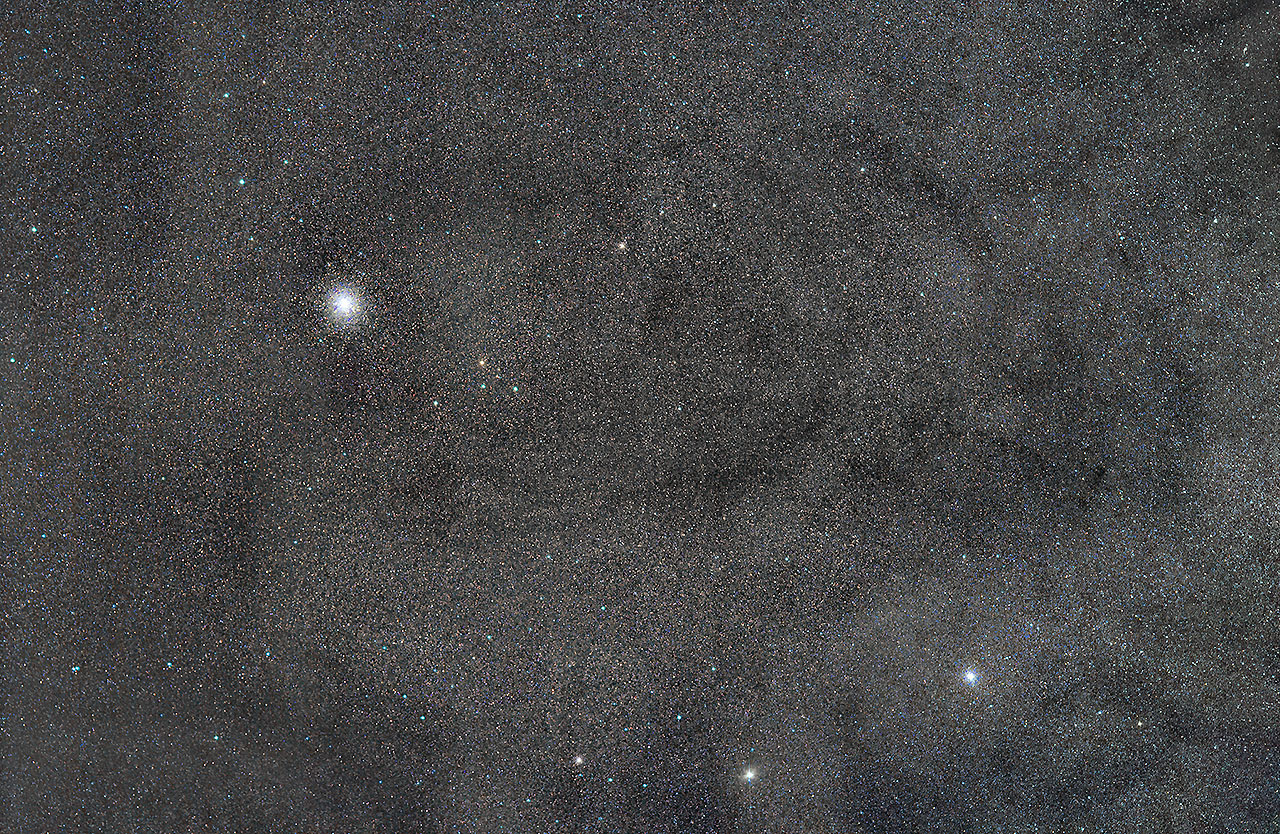
2026/10/05. M22 redux. I cut the exposure down to 6 seconds and increased ISO to 6400. Then I took 115 frames of the rich starfield around M22. Make this one big.
I still got substantial drifting, but not so much that BlurXterminator couldn't handle it. I think I alarmed some of the neighbors in acquiring that image. I'd parked the car on sloping south side of the community lot to block some bright exterior lights. I called it a night early because sometimes enough is just too much. [cf. the Everhardt Doctrine] Now, back to debugging the portable rig. I rebuilt the stand that holds an iPhone for digital polar alignment, but I'm still getting mediocre results from the iPhone. It has worked before, but not now, and I'm not sure why.
:: top ::
|
|
© 2026, David Cortner